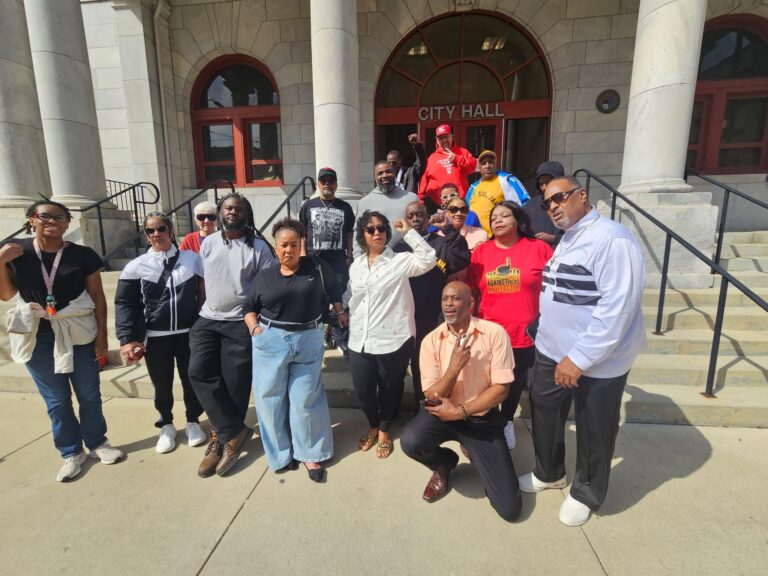
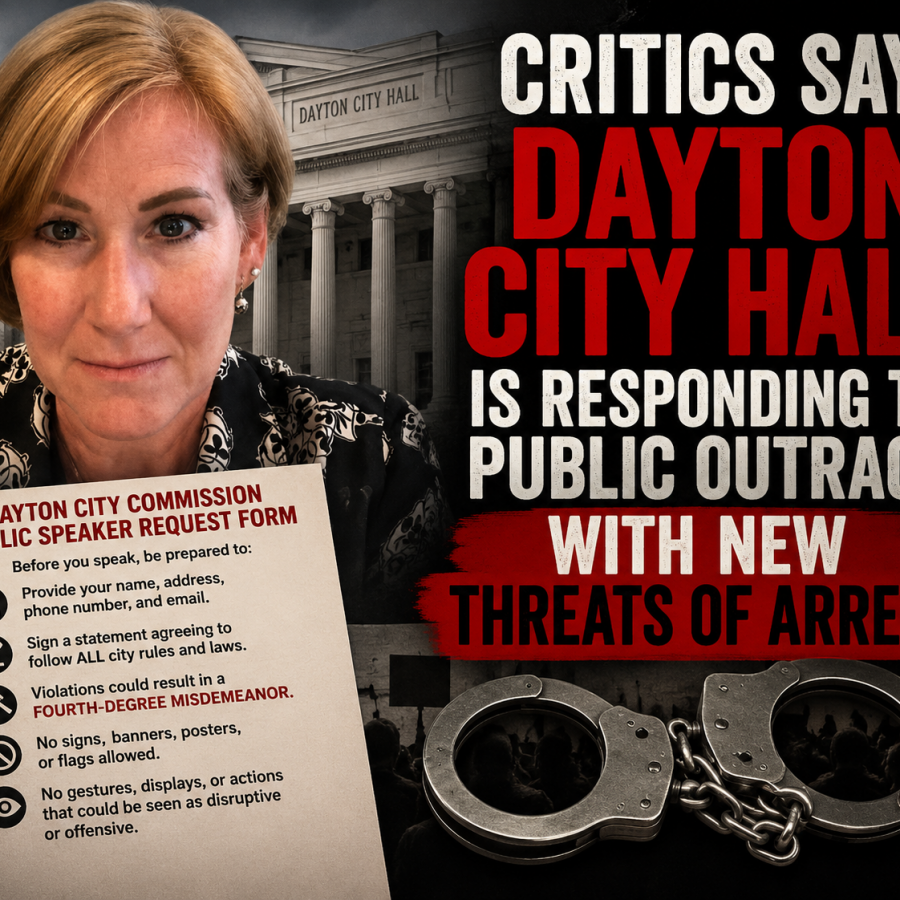

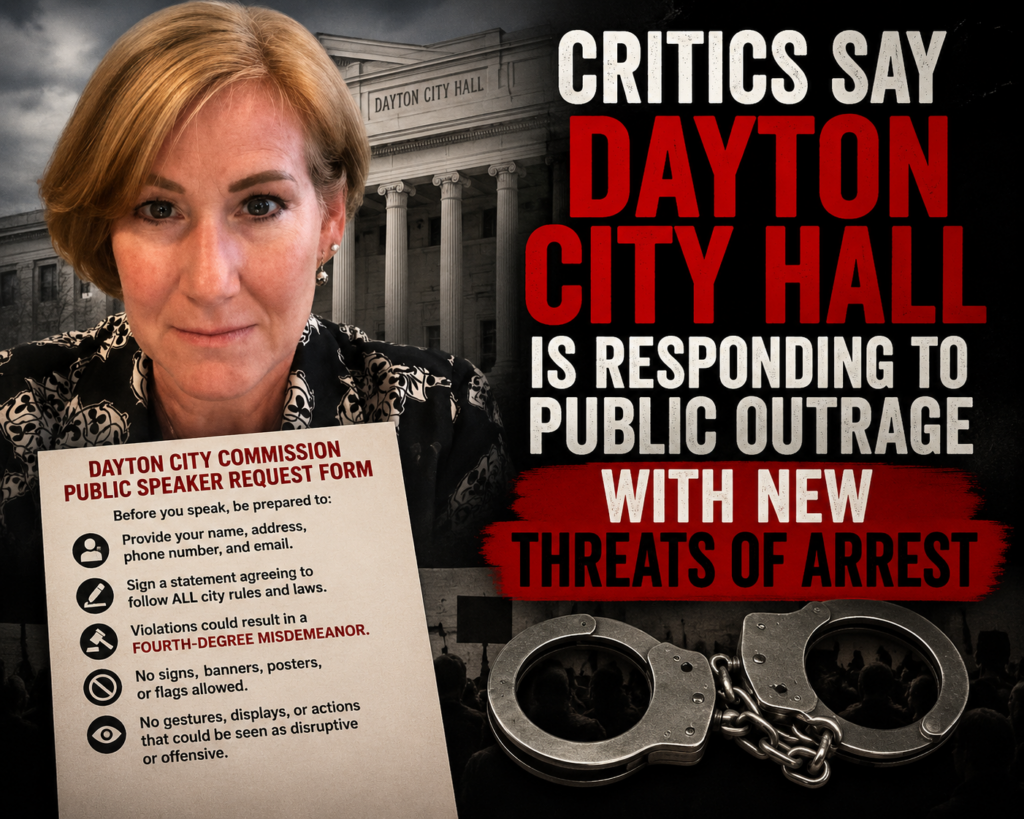
Since the police killing of Reginald Thomas in March, Dayton City Manager Shelley Dickstein has faced growing criticism from residents across the city. Calls for her removal have become louder at City Commission meetings, community gatherings, and public events. But critics say the City Manager’s latest response is not increased transparency or public engagement—it is new restrictions on citizens who wish to speak before their government.
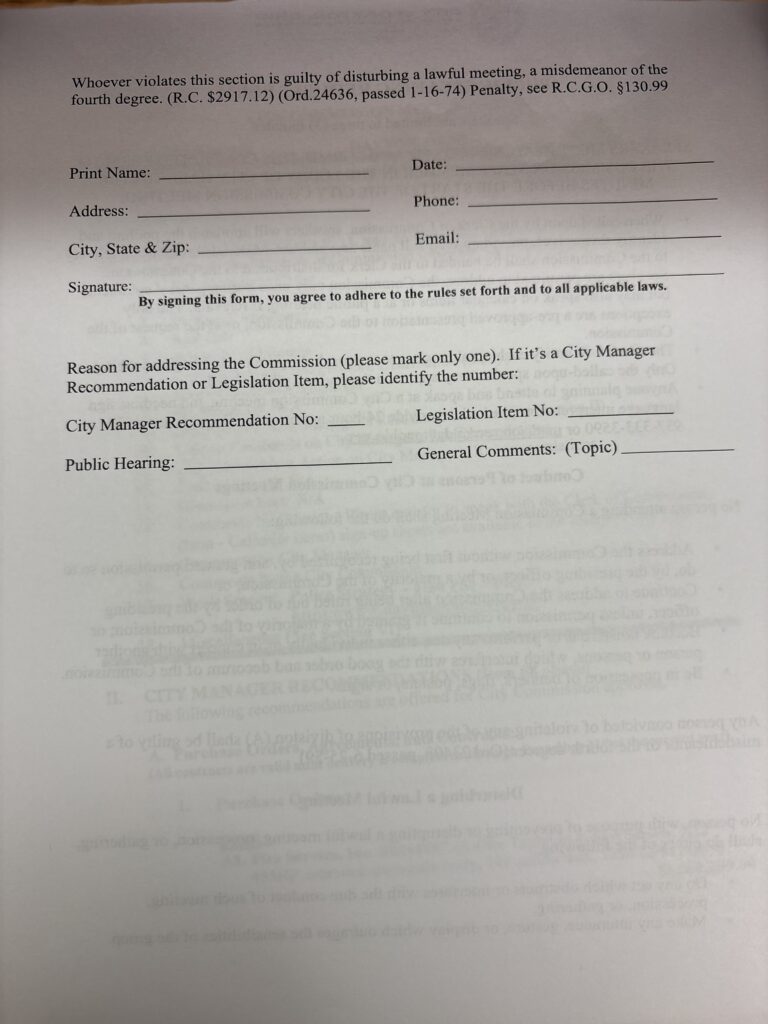
At the June 10 City Commission meeting, residents who wanted to speak during public comment were required to sign a new form outlining rules and restrictions for participation. The form requires speakers to provide their name, address, phone number, and email address. Residents must also sign a statement agreeing to follow city rules and applicable laws before being allowed to address the Commission.
The form warns that violations of certain meeting rules could result in a fourth-degree misdemeanor charge. It also prohibits attendees from bringing signs, banners, posters, or flags into the meeting chambers. Another section warns against gestures, displays, or actions that could be considered disruptive or offensive.
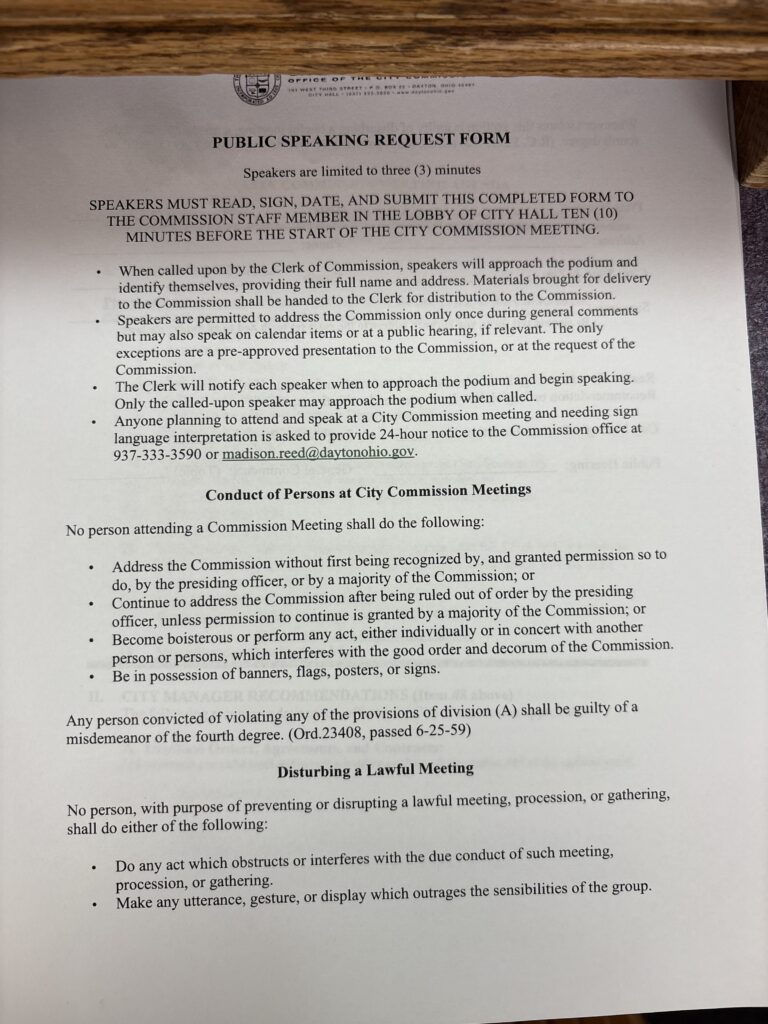
Critics say the language is intimidating and sends the wrong message to residents already frustrated with city leadership.
For months, citizens have attended City Commission meetings to voice concerns about public safety, neighborhood conditions, government transparency, economic development, and accountability. Many residents have specifically called for Dickstein’s removal, arguing that her leadership has contributed to many of the challenges facing Dayton today.
Adding to the controversy is the recent public debate surrounding the city’s use of Flock surveillance cameras. Critics accuse city officials of misleading residents about how the camera system operates and how information collected by the system is shared with outside agencies. Concerns have also been raised about reports that information gathered through the system has been made available to federal immigration authorities, including ICE.
As public criticism has increased, opponents say City Hall has responded by creating additional barriers to public participation.
“People should not feel threatened when they come to speak to their government,” said one resident who requested anonymity for fear of retaliation. “They should feel welcome.”
Critics question why the city is emphasizing criminal penalties at a time when public frustration is growing. They argue that residents should be encouraged to participate in local government rather than confronted with warnings about possible arrests and misdemeanor charges.
The issue resonates strongly in Dayton, where many residents already feel disconnected from local government. The city has struggled for decades with high poverty rates, racial segregation, and unequal opportunities between neighborhoods. Residents of West Dayton have frequently raised concerns about disinvestment, the loss of hospitals and other essential services, limited economic opportunities, and a lack of meaningful input in decisions affecting their communities.
Because of these challenges, many community activists believe public meetings should serve as a place where residents can freely express concerns and hold elected officials accountable.
They worry that requiring citizens to sign forms referencing criminal penalties could discourage participation. Others question why personal information such as phone numbers and email addresses is required before a resident can address public officials.
The controversy has sparked a larger debate about the role of citizens in local government. Should city leaders focus primarily on maintaining strict order during meetings, or should they make it easier for residents to participate, even when conversations become emotional and contentious?
That question continues to divide opinions throughout Dayton.
What is clear, however, is that tensions between City Hall and many residents remain high. As more citizens attend meetings and demand answers from city leaders, the debate over free speech, public participation, government accountability, and the future direction of Dayton is likely to continue for months to come.